Showing posts with label Daniel Bryan. Show all posts

Friday, 16 August 2013

In Defence of Wrestling

So the big story in wrestling this week, amazingly as Summerslam is on Sunday, and I am sure there is no link at all *coughs*, is that of Darren young coming out as gay. Which is great that he feels comfortable enough to be himself. However as I read through the tweets on the story, following up The Guardian’s story on the subject there was so much negativity. Not towards Darren thankfully, this is The Guardian after all, but towards wrestling fans. We are “@mansillo: hill billies are not happy in fact very confused a gay man can do anything contact sport like” and that “@EternalScot"sports" star? Minor celeb more like” and a few others that got deleted as well.

We know its not a sport. We know it has predetermined finishes. We know and quite frankly talk to the wrestlers, script writers and producers of the shows on a regular basis. Dave Lagana (head writer for TNA) is on the web all the time constantly checking feedback. Via twitter and social media wrestlers talk to us from all over the world. They are some of the most accessible, funniest and intelligent conversationalists you are likely to find. This week I learned the dreams of The Alpha Female, and talked Japanese wrestling with The Dark Angel, and found out who Adam Pearce would wrestle in an Airport. Wrestling has guys like CM Punk who take their time out of being entertaining one way, to be entertaining another and teach us grammar.


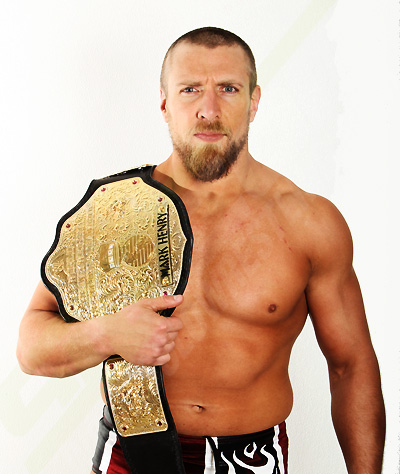
And yes there is the wrestling. Which we all love, because at a base level we want to see the good guys win. At a higher level we want to see people do amazing things, we like blood and guts yes, but only when it means something. Sound like a person who watches an TV drama right? That is what wrestling is, with layered meta data with each participant. When I see Daniel Bryan wrestle in front of a sold out crowd this Sunday at Summerslam, if he wins the title I know I will cry. Why? Because I have seen him wrestle all over the world for ten years, getting his head kicked in Japan, taking on the luchadors of Mexico, putting together one hour classics with AJ Styles and Samoa Joe, his victory will mean the world to me because I believe in him. I do not care that he has made me believe, I don't care that this is a concocted dramatic moment. The sentiment is mine and others to enjoy. 

Not a real sport? I am sure John Cena whose arm looks like someone pumped it up with an air compressor this week will tell you that injury is as real as it gets (his second arm injury with in a year I might add), or Sheamus who had to have 6 pins put in his arm. These people go through hell for us. So next time you see a striker dive in the penalty area and appeal wildly when the defender never touched him, don't complain that wrestling isn't real.

Is it a sport? No its not, but its competition none the less, and far tougher than any major sport to succeed in. There are about 2000, playing jobs open in the NFL, how many playing jobs in world soccer, 5000? the NBA has roster slots for 450 players plus all the other professional leagues in the world. The WWE and the other large wrestling promotions that can afford to pay full time offer about 300 jobs, world wide. If you want to do this you have to give your heart and soul to it and that's just to make a living at it, never mind become a star.  

Pro wrestling is not fake. Pro wrestling is what pro wrestling is, we get it, we enjoy it, we love it. If you don't that's fine. However we had out gay men running wrestling and we accepted him years ago, I wonder if any other “sports” did that?  

Saturday, 23 June 2012

Retreading the path to Glory

My approach to this blog has usually been video and commentary, show and tell if you will. This week I offer an aberration and a State of the Union, inspired somewhat by Grantland’s excellent The Masked Man. As he concerns himself with story telling, I’m all bout the style.

I am not just a wrestling fan; I’m a music fan to. Back in the mid nineties I had a favourite band, The Ataris. Being a punk I loved their attitude, their “for the cause” realism matched up with explosive pop punk. They had shows that where joyous parties of exclamation. They rocked in short. Then they signed to a major. Their attitude changed somewhat. It was slow, but I saw every faltering step. By their second album on the major they had essentially split up. I felt for them, all they wanted was a bigger audience after all, but I knew that would be the way things played out. I had a slight sense of disappointment when they joined up to the major. It wasn’t that I thought they’d sold out; it was that I thought they wouldn’t be treated right. I have seen to many bands fall by the wayside or seem out of their depth, a story in Kerrang confirmed it to me; gone was the relaxed attitude, the turning up late for interviews and goofing off, on was the serious face of being a professional rock musician. I feel the same way about wrestlers that go to Vince after being darlings of the indie circuit. Certainly it felt that way people came up from ECW around the same time as my beloved Atari’s signed with Columbia. Essentially though it was the same thing, some drowned, some made it. A lot of that was to do with Vince Macmahon and talent relations. However for every Mick Foley that got down to work to reinvent themselves, there was a Dean Douglas who got lost in the shuffle. Whose fault is it? The front office? The wrestler? The fans for not caring enough? As Paul Heyman recently let loose on his twitter feed, wrestlers need to take every opportunity afforded to them. Looking back at the great careers of the past, indeed of the people who made me fans. I look at every open door the purposefully strode across. Would Dynamite have had as many great matches in his career had he not got on the plane to Canada? What would have happened if Ric Flair had staid in Minnesota? If Hulk Hogan hadn’t had been pushed into taking the job with WWF by Verne Gagne? This is where as a wrestling fan thing gets tricky, you can hate Vince for what he did to the territories, but he only really put out of the business the men who didn’t happen to be hungry enough, or the places in which his product did not relate to its audience. This is especially true of Japan, the style doesn’t work and they are all hungrier than he is. All these opportunities, some times they come, and some times they go. Two guys who have had opportunities most recently at the highest level are Colt Cabana and CM Punk. The NWA and WWE Champions and two best friends who this week presented the Art of Wrestling podcast and essentially explained not only the differences between being today’s NWA champion and WWE champions, but as representatives of their respective styles of wrestling. Back in the eighties when the territories crumbled, it took with it individual booking styles. They way things could be presented varied all over the world. When WWE became top dog essentially that was all we had left for mainstream consumption. The WWE became the biggest thing in the world and that too many people is wrestling. Not to me though, I would fantasise about matches between Wayne Bridges and Hulk Hogan (Joint and WWE world Champs) as I tried to figure out in my little kayfabe heart where everything lay. Out of the ashes of the territories though grew and underground. Just like in music, more specifically Punk. The underground is currently represented by Cabana as NWA champion, king of the Indies, most popular worker in the North America outside of the WWE bubble, probably in the UK to aside from the darlings of TNA. CM Punk is probably the most popular wrestler in the world aside from John Cena. They both learned how to wrestle at the same time; they both went to the same school and gyms and still do. They are both self made men. What they have done for the wrestling industry is bring the mainstream a little closer to the underground (Punk) and given the underground a model from which to work (Cabana). So what I hear you cry has this got do with British wrestling? The links in the chain go through Punk, Cabana and indeed Chris Hero, Daniel Bryan, Claudio Castignoli, Sara Del Ray, Mike Qaukenbush, Davey Richards, Eddie Edwards, Samoa Joe, Austin Aries and many more. This generation of stars took influence from what came before, but never have so many given credit to the people who it was due to. They name check their heroes and heroines constantly and encourage their research in the finer arts of pro wrestling. They look back at the glory days of British Wrestling and bring it full circle; they find people like Robbie Brookside, Les Thatcher and Steve Regal and encourage them to train themselves and others. Their hard work and dedication to British pro wrestling is paramount into revitalising what was once thought of as a dead style. When the FWA was a fledgling promotion I remember Power Slam magazine reviewing one of their cards, exclaiming that the match between Johnny Saint and Steve Grey was an anachronism to that spoiled the card of excellent wrestling in the ECW style. Putting that match on then it turns out was around fifteen years to early. LDN wrestling recently put on a match with Johnny Kidd and Johnny Saint that tore the house down as people now had something to appreciate in the sense of history. They didn’t learn it from Saturday afternoon ITV broadcasts. they learnt it from youtube, they learnt it from watching and listening to Steve Regal, they learnt it and watched it from Daniel Bryan, CM Punk, Colt Cabana and Chris Hero. These men who loved our wrestling more than we did; enough to embrace it, reinvent it, cross breed it, develop it and produce something new.

When Punk went full on mainstream last summer, and more so when Daniel Bryan did, that evolution was complete. Looking around the wrestling world we have a mat technician in Austin Aries in the main event of the next TNA PPV, Bryan and Punk at the very top of the card in the WWE, Cabana as NWA Champ. Castignoli and Hero ready to be reborn to that new audience. Of course I still feel protective of some talents, just like my small and perfectly formed punk bands. Would Sara Del Ray make it in the WWE? I think so, would she want to be a WWE Superstar is another question. The woman who helped reinvent Joshi for a new North American audience is unlikely to want to be considered a Diva, but then again Punk only ever wanted to be a wrestler and he managed to make that change in the WWE happen. Back home we have the strongest scene we have had for a very long time; I just hope it remembers its roots as well as our friends cross the pond do.                     

Thursday, 12 April 2012

A brief bit of history

British wrestling history is a tale of three halves. Pre World War II, Post World War II and Post network TV. As the entertainment we know and love today the Pre WWII wrestling establishment bore little relation to what would come to pass after it. The matches could be wild to say the least and came from the folk styles of wrestling that occurred in the late nineteenth and early twentieth centuries. What occurred after the war set up the way things went for quite some time.

After World War II Britain had become a social melting pot, an NHS, better education, more jobs; the world was still in austerity but things where getting better. Working class folk had more money to spend on entertainments. They now had many more places to entertain themselves to; specifically what was to become the Club Circuit. With national service still in full swing Services Men’s clubs cropped up all over the UK. With unions not only strong but still based in industry, working men’s clubs also popped up on estates in small towns. Club Land as it was to become known was the place to play in entertainment, just as Music Hall had been before that. The key link between those two eras of British entertainment was variety. A club could not put on a comedian seven nights a week, so new ways of entertaining people had to be found. Boxing and other sports that could be put on in a confined space became popular. Another beneficiary was wrestling.

The newly minted Mountevans committee determined a set of rules that got away from the pre war free for all and helped promote a lively but wholesome sport for the whole family to enjoy or promoters to exploit, depending on how you looked at it. One of the quick developments was the linking of promoters nationwide. Having seen how the NWA had managed to sooth tensions in the USA to the point where everyone made money. British promoters pulled the same trick and called it Joint Promotions. In reality much like in the US it was a closed shop. No one could run in anyone else’s territory. As TV contracts became more lucrative this was an important issue but back in the late forties and early fifties it left two lasting marks. One; The town halls and exhibition centres of the UK would run the big companies from Joint Promotions such as Dale Martin in London or Best promotions in Liverpool. Two; there had to be other places to wrestle specifically in the North. Wrestling in the North, thanks to the pre war era, was a shooters heartland. So as clubs began to run weekly wrestling shows (a different night in each club) it provided an independent circuit for smaller promoters and wrestlers to earn a living. As Johnny Saint recently pointed out in his Art of Wrestling Podcast with Colt Cabana; he could work shows all around Manchester all week long and earn more than he could in his day job. As he worked his way through the club scene he got noticed by Joint Promotions and went to wrestle for them and then on and up to be one of their champions. Colt likened it to being an indie star now that goes on to being picked up by the WWE. These rival promotions would sometimes get a “little to big for their boots” and take on the major promotions, as Paul Lincoln did to Dale Martin promotions in the 1950s, but overall everyone kept the peace because everyone was making money.

Of course with a closed shop that meant wrestlers got what they got and not a lot more and that was pretty much that. Once you got to a good spot on the card you where earning a lot more than you would be working the Club’s and a lot more than working a day job, and doing something you loved for twenty minutes a night wasn’t really work. The independents though had their moments. The British Wrestling Federation was a promotion running out of the North West of the country and featured the British Heavyweight Champion Bert Assirati, who for want of a better word, had blackballed himself out of Joint Promotions for being his own man. As Joe Cornelius explained in his book “Thumbs up Boy” he would get called to go wrestle somewhere in the world at short notice and would find Bert waiting for him in the dressing room when he got there. The reason; Bert had probably hurt someone in his attempt to get over and no one would wrestle him so they would call Joe. By the late fifties however Bert was taking fewer and fewer matches and the Crabtree’s (for it was them who owned the BWF) started to promote Shirley Crabtree (a much more trustworthy champion, who also happened to be one of the brothers), Shirley retired not long after being given the belt, partly to do with the money, being an outsider, and partly because the belt had been given to him while Assirati had been out of town and Bert wanted a say in getting it back, the hard way if necessary. Bert was not afraid of an open challenge or two, once turning up at the Royal Albert Hall to challenge Lou Thesz. As Joint where a loose NWA affiliate, that never occurred. Knowing what we know now about Lou and what we know about Bert it would have been somewhat of a boring shoot match, but it would have made money.

That is really what did for Joint Promotions in the end, a lack of vision. As the seventies arrived the Joint banner was flying high, as they continued the flags began to dip. They had the TV money which was secure, but as the promoters and bookers all reached retirement age, there was only one man left to turn to. Max Crabtree who became the chief booker for Joint Promotions. While Crabtree once again turned to his brother to become Big Daddy, somebody else was looking at making things work in a different way.

Brian Dixon began his wrestling career by running the Jim Breaks fan club, he moved on to promotion as an independent in the late seventies. When he got there he set about changing the wrestling industry in the UK. His first major signing from Joint was John Quinn who had recently headlined a Wembley against Big Daddy. He then signed World Heavyweight Champion Wayne Bridges, and so it went on. Every year Dixon would sign a major star. But it is what he did with them that counted. His shows worked on an episodic format like Southern wrestling. No weekly TV shows though, just a weekly live show in the same venue. The result was live money cash which pulled them in every week. There where also benefits to having the stars. Marc Rocco liked wrestling the Dynamite Kid, so when Tommy came home he did not have to go far to find a match to fill a spare night. Marc also had friends in the front offices of NJPW so when they needed to season a kid they had found, Fuji Yamada or Jushin “Thunder” Liger, ended up in All Star promotions and produced similar box office and response as Akira Maeda and Satoru Sayama had done for Joint years before. When All Star got a share of the TV contract  in late 1986 they used it to their advantage booking storylines just as they had done on there weekly live events. Joint looked 30 years older in comparison. When TV was pulled in 1988 Joint went into terminal decline eking out a living for the few loyal performers left. Everyone else of note went to All Star and took their titles with them. The major money feuds that ended the TV run of All Star, Wayne Bridges and Marc Rocco versus Kendo Nagasaki and whomever they could find to get beat up, made money for All Star long after TV coverage finished. Of course free from the constraints of Joint, Marty Jones could go one last time with Marc Rocco and Dave Finlay, the money was till there for a while before decline truly set in the wake of the WWF take over.

Looking at the business now, as it all bad for British wrestlers? In the WWE there are two major British talents Wade Barret and Mason Ryan. Steve Regal is important to the WWE as a talent trainer, commentator and occasional in ring competitor and is still working 24 years after his TV debut. TNA has Doug Williams, Magnus and Rob Terry along with a very strong UK fan base. Dragon Gate has PAC. Ring of Honor has used many British talents in the past, most notably former champion Nigel McGuiness, still commentating for them now. Dave Finlay to after a successful career in WCW, WWE and now back on the indie circuit to scratch his itchy feet is working shows for Ring of Honor. Back home there are over twenty regular promotions doing strong enough business to survive and even thrive. Let us not forget to one person who links all of these eras together. Former World’s Heavyweight Champion Daniel Bryan, not only trained by Steven Regal and Robby Brookside, but also a very proud alumnus of All Star Promotions.                  
I would like to acknowledge this article in the writing of this piece; http://houseofdeception.com/British_Wrestling_History.html

Saturday, 10 March 2012

Six of the Best; Goldbourne's Finest

If you grew up in Lancashire in the nineteen sixties there was really three things you could be in life of note. A minor, a Rugby League player or a professional wrestler. Lancashire was one of the hot beds of pro wrestling and as I got onto the internet in the mid nineties and started researching the things that I liked more closely it appeared to me there was three places down the years that always attracted the best practitioners and had the greatest reputations. As far as hookers where concerned the original place to learn your craft was The Business Man's Gym in Saint Louis Missouri, home of one Lou Thesz. As the shooter dominance shifted Lancashire began to take over that crown. Straight up shooters and hookers like Billy Robinson and Billy Joyce spread the reputation of Lancashire through the business. Trainers like Billy Riley and Ted Betley enhanced that reputation  built on the grass roots of traditional Lancastrian amateur style, a need to wrestlers to protect themselves in a hostile environment and a willingness by the new trained workers to get away from the world of mining and Rugby League by putting the best matches on the card they could.     

The Dynamite Kid Tommy Billington in my mind exemplifies that standard better than anyone else of that era. Tommy was small when he started and in the matches we will look at he wrestled first at lightweight and then at welterweight, very quickly becoming a star and a champion in both divisions. This early match also shows that he was destined for great things, not for its quality, though it has a kind of rustic charm, but for his tag team partners and the way he was billed.


Six man tags where rare on UK TV, they had to be kept in a glass cabinet marked "break only in the event of being desperate for a TV draw". Much could be said of the Royal Brothers at this point. Fine singles wrestlers in their own right, they where the biggest drawing card in the North of England as a tag team. The cool, calm and clinical Burt contrasted the happy go lucky but unstable anger management of Vic. They where essentially a scaled down Funk Brothers. For Bert read Dory Funk Jr. for Vic read Terry Funk. the matches they had though where phenomenal, they where lightning fast when quick tags where an anathema to UK wrestling. They where the money. So when Dynamite is introduced as their hand picked partner he is getting the biggest of all main event rubs.

On the heel side we have the colourful Tally Ho' Kaye whose gimmick was of a horsey hunting land owner type, which was cool and interesting but kind of came undone when he opened his mouth and came out with broad Yorkshire. Sadly I can not tell you a lot about Ken Hogan, I've never seen him before or since this bout so its pretty safe to say he wasn't going to the hall of fame. Finally the perhaps least successful British heel of all time Blackjack Mulligan. Of course as a completely uninspired gimmick as most copyists tend to be he was never going to be like the original Blackjack Mulligan and aided the theory that a cool name and a beard isn't everything. People have to care about you one way or another, sadly few people cared of Blackjack was in the match or not so long as he got beat up as usual. Here has the opportunity to hone that skill dropping the first fall of this best of five match (best of five in a 20 minute match are you mental?) in the first twenty seconds.

Ah but I promised you focus on Dynamite so we shall, he tags in and delivers the crispness that he was to become known for. Precisions throws and escapes and finally has the wind taken out of him with a posting that turns the match. However that gave off the other side of Dynamite, the bump machine that made his name, he makes Hogan look great before taking over again and taking the fall in smooth fashion. Of course the heels have to have their comeback and its Dynamite that will be on the receiving end, burying a bunch of guys three nil would be to high a price to pay especially on TV. Even Mulligan and Hogan could be useful somewhere.

So as the heels beat on poor Tommy they get more and more vicious to the point of Max Crabtree having to employ the beard pull to get Mulligan of the Kid. A tactic I'd like to see used on Daniel Bryan more often. What is impressive is Dynamites ability to sell everything often something over looked in UK rings. As I mentioned in the last Blog Steve Logan's underselling of the Riot Squads offence took something away from the match but everything Dynamite does makes sense and enhances the story, building to the hot tag. When Burt gets tagged in from the dramatic back-breaker submission its house cleaning time for both Royal's, a dropkick and a bodyslam seal the deal.

So this shows the rise of a young star, still having to make others look good but the top of the mountain was not that far away for Dynamite. In 1977 he would defeat perennial British Lightweight Champion Jim Breaks for the belt. Breaks moved up a weight to feud with Vic Faulkner over the British Welterweight title only to be beaten by Dynamite again who took home two belts. One of the few British wrestlers to hold titles at two weights at the same time. Then Calgary came calling. The Hart brothers in the eighties became frequent visitors to UK shores, the matches they had hear became part of their training and understanding as to what would work back home for Stampede wrestling. With the tight nature of promoters of the time, it also gave chance to meet up with New Japan alumni like Satourou Sayama and Akira Maeda. Bruce and Bret liked what they saw in Dynamite and offered him a job. Off he went on a short tour that was suppose to last a couple of months and wound up being fourteen years.

However he would come back from time to time to show us what he had learned. Next time we look at one of those matches from an era when British wrestling was the place to be (if you where under twenty stone).

Till next time grapple fans. 

Friday, 2 March 2012

FA Cup Final Day

Welcome back to the blog that's had well 16 hits so far. Well gotta start somewhere.

Today we head out to down to Walthamstow (and 1972) for a a double title day, one the FA Cup, but first the things that really matter. The British Light-Weight title and belt, to be fought over ten, five minute rounds, with two falls, submission, a knock-out or a disqualification to decide the winner. On your left in the blue corner, from Bradford a very young looking defending champion, Jimmy "Crybaby" Breaks. Interestingly never announced as such, his ring name was earned for his reputation of throwing a strop when things where not going his way. In the red corner from Manchester, the challenger Mr. Johnny Saint. Saint in his trademark terrible 70's hair cut which thankfully morphed into a short back and sides by his iconic 80's run. This matched the footballers who where to do battle later on in the day after this pre-taped title match aired.

Cup final day throughout the 1970's and into the '80's was without a doubt and event of epic televisual proportions. Cup final specials abounded, but it was important to wrestling; for one day of the year it would be bumped out of its usual 4pm slot, and secondly it would have the biggest possible audience. Quite frankly cause there was naff all else on. 3 Channels, two showing football, not only football but THE SAME GAME. Enough to make you heave, anything is light relief after or before that. So, over to Kent.


The fact this wasn't the main event blows my mind. As Walton points out later in the commentary Joint Promotions tended not to put title matches on TV, quite sensibly that would hurt the live gate. With closed circuit TV not available yet, no TV equipment of their own to film it (everything was brought in), and no way of disseminating the title matches to their audience in a fee paying manner they had to protect their best stuff. Of course that would also take investment, something British wrestling promoters wouldn't get the hang of for another 40 years.

There is the obligatory title defence hand shake (everyone did this face or heel) and we are off. Breaks does slowly build up to the whining, cheating and cry baby tactics but up till then its what the good people of Walthamstow had come to see a good classical contest. 

At 2.50 in this clip we start to see what Breaks was all about; arms submissions. The Crybaby character was all well and good for selling tickets but it couldn't work in the ring without something vicious to back it up. Jim wanted to win and he wanted to win with the Breaks special, a modified folding arm lever that looked supremely vicious. The only people who have seen tried copying it since are long time rivals in the well trod "stealing the finisher" gimmick of Saint himself later in this match and Steve Grey. Most recently Bryan Danielson attempted it on Johnny Saint at the King of Trios in 2009 yes folks 2009. Johnny Saint has been wrestling that long, and still is. At 72.

Anyways back to the match. Things are going swimmingly for Jim. He starts controlling before losing his grasp on the escapology specialist. The story of this match was quite similar throughout the seventies for a heel champion. He loses cleanly and in humiliating fashion to a well fancied challenger and so has to give up the title shot at some point. The championship advantage of course did not occur under Mount-Evans rules, the belt changed hands on DQ or CO, so it made draw finishes much more useful. Both guys where protected and future rematches would be down the line. But more on the finish later.

Jim Breaks was by this time into his third reign as British Lightweight Champ. As he held it a record ten times we can safely call it "his" belt. A quick flick through the title reigns shows an interesting trend; he always dropped it to wrestlers who where on their way up to different things. The two most notable names on that list being Johnny Saint, soon to be worlds lightweight champion on the retirement of George Kidd and The Dynamite Kid himself on his way to being arguably the greatest British wrestler of all time.


As a fan the one thing I couldn't stand about Breaks was his constant chatter with ringside fans. It drives you up the wall, just as it should of course. The stress in the commentary is the 2-0 win for Saint in the none title bout, this gave a real idea that he could knock off the champ, and the advantage of presenting wrestling as a real sport. Something Ring of Honor do better than anyone at the moment. The momentum then is with the challenger, at 5.35 the temper starts to fray and so we get the tantrum with a well placed handkerchief from a well meaning fan that couldn't have been more appreciated by Jim I'm sure.

From a title perspective Breaks' long and continuous reigns matched a slate of champions from the wrong side of the tracks each promoted differently so as to make sure they meant something different to each division. Breaks was the sneak thief heel who got away with it. By contrast the fans would at least respect Mark "Rollerball" Rocco even if they knew he cheated, but he could go with the best in a straight wrestling style to.All of the champions where top notch for match quality as Saint proves, at 9.45 even Breaks comes out of character with a wry smile to applaud the acrobatics.


Clip three brings the first and what turns out to be the only fall of the match. What happens next is what really stands out for a match of this era. Baring in mind this match was shown on a Saturday morning with the kids off from school, there is a fair amount of blood. First there is the vicious side of Breaks trying to exact revenge on the Saint nose. Then Saint's retaliation for the big pop as Breaks has his nose broken again and bleeds profusely before Breaks snaps and heads out to hurt Breaks with the big bump to the floor. What is remarkable is that both these bleeds appear to be blade jobs.  

The finish of course protects the champion and would lead to another title show down the line for the unfortunate Saint who was 1-0 up when there was a TKO. A nice shot though from the crowd at Jimmy's unprotected skull. The Mutoh Scale was not in effect back then but this wasn't to bad in comparison what my Dad called the "Billy Howes Effect" which was how much Billy Howes could make Kendo Nagasaki bleed on a National TV.
   
So there you have it grapple fans, the title picture in 1971, but Johnny Saint was going to move onto bigger and better things. If you can't have Great Britain why not go for the world?

Oh yeah Leeds United beat Arsenal 1-0. Given the Leeds (inventive but violent) and Arsenal (boring and violent) sides of the time it was safe to say this wouldn't be the only blood on a May Saturday afternoon.

Have a good time, till the next time.