Showing posts with label Max Crabtree. Show all posts

Thursday, 8 August 2013

GWA and North East Lincolnshire Wrestling

North East Lincolnshire. Not a name or place that you think runs in the veins of wrestling history, but for me it does and hopefully, for a generation of new fans, wrestlers, bookers and performers it will do again for a long time to come. You see the Grimsby Wrestling Academy and by extension their promotion GWA are doing great things. They offer professional classes with a wide ranger of trainers and have brought in seminar specialists like Kid Kash. Just looking at their website will tell you they value high quality production which is essential in the modern wrestling market not just in the UK but world wide. They clearly understand what needs to be done. I should offer a disclaimer here I haven't been to one of their shows or a session this is a first glance look at the promotion but as a long time fan I am very impressed and pleased that this part of the world has a new champion for its strong wrestling heritage. Their next show will feature The Homicidal, Genocidal, Suicidal Death Defying Sabu and marks a return to NE Lincs offering shows of very high quality. A true case of “If you build it, they will come”. 
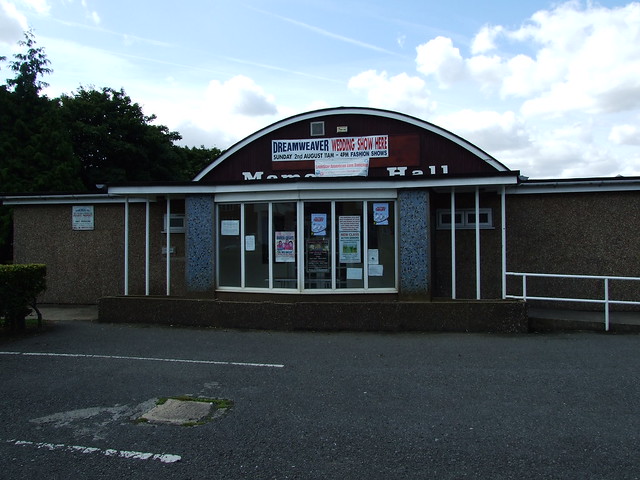

You see back in the day, when I was a wrestling fan at the beginning of my obsession I was in North East Lincolnshire one Sunday every month. Now GWA offer their shows at Grimsby Central Hall, but it was down at the Memorial Hall in Cleethorpes where I got my first long term fix of monthly pro wrestling. Back in the early eighties, in one of Joint Promotions boom periods, and just before the Crabtrees take over of that particular company, the shows on a Sunday night where immense. I got to see everyone that mattered in the wrestling world and it set my mind on what good wrestling was from a young and impressionable age. The main eventers of the time Dave “Fit” Finlay, Chic Cullen and my personal hero Marty Jones all wrestled there on a regular basis. They where not the only ones, I sadly just missed out on seeing The Dynamite Kid, Bret Hart and Saturo Sayama who also wrestled at that venerable hall. Little did I know I was watching guys who would have a major influence on not just British wrestling in the TV era, but world wide. Dave Finaly became Finlay, now a road agent for WWE and the driving force behind the great Diva's division of the early 2000's. Saturo Sayama went on of course to be Tiger Mask and his matches with The Dynamite Kid reinvented Junior Heavyweight pro wrestling in Japan. He also went on to be a founder of the original UWF which was a massive influence on shoot fighting and was part of the many things that brought us to the MMA world of today. Dynamite and Bret? Well you know what happened there. Marty Jones went on to train William Regal who you hear weekly on FCW programming and is a great influence on the training regime of the WWE. So for a while there Cleethorpes turned out to be the wrestling capital of the world. Maybe not as romantic as the NJPW dojo, or The Businessman's Gym in Saint Louis (Lou Thesz's home gym) or even The Snakepit in Wigan, but just as important to me because that is where my home of wrestling will always be.

However back to the present day, it is great to see a new wrestling business that is taking care of doing the right things and impressing at first glance. They are also at the moment encouraging take up with offers and promotions on wrestling lessons. So if you are in Grimsby go see a show, or take a lesson. This is a great opportunity to build a foundation for wrestling in North East Lincolnshire. With things looking strong nation wide an opportunity that could mean work, and more wrestling for all of us fans to enjoy. Tickets for their EXTREME! Show on the the 30th of August are £8 for full whack with some concessions and considering what you are getting that is great value. You get to see Sabu for eight quid. You lucky, lucky people.

Have a good time till next time grapple fans.

Grimsby Wrestling Academy on Facebook @ www.facebook.com/grimsbywrestling

and on the general web @ http://www.grimsbywrestling.com/home

Thursday, 12 April 2012

A brief bit of history

British wrestling history is a tale of three halves. Pre World War II, Post World War II and Post network TV. As the entertainment we know and love today the Pre WWII wrestling establishment bore little relation to what would come to pass after it. The matches could be wild to say the least and came from the folk styles of wrestling that occurred in the late nineteenth and early twentieth centuries. What occurred after the war set up the way things went for quite some time.

After World War II Britain had become a social melting pot, an NHS, better education, more jobs; the world was still in austerity but things where getting better. Working class folk had more money to spend on entertainments. They now had many more places to entertain themselves to; specifically what was to become the Club Circuit. With national service still in full swing Services Men’s clubs cropped up all over the UK. With unions not only strong but still based in industry, working men’s clubs also popped up on estates in small towns. Club Land as it was to become known was the place to play in entertainment, just as Music Hall had been before that. The key link between those two eras of British entertainment was variety. A club could not put on a comedian seven nights a week, so new ways of entertaining people had to be found. Boxing and other sports that could be put on in a confined space became popular. Another beneficiary was wrestling.

The newly minted Mountevans committee determined a set of rules that got away from the pre war free for all and helped promote a lively but wholesome sport for the whole family to enjoy or promoters to exploit, depending on how you looked at it. One of the quick developments was the linking of promoters nationwide. Having seen how the NWA had managed to sooth tensions in the USA to the point where everyone made money. British promoters pulled the same trick and called it Joint Promotions. In reality much like in the US it was a closed shop. No one could run in anyone else’s territory. As TV contracts became more lucrative this was an important issue but back in the late forties and early fifties it left two lasting marks. One; The town halls and exhibition centres of the UK would run the big companies from Joint Promotions such as Dale Martin in London or Best promotions in Liverpool. Two; there had to be other places to wrestle specifically in the North. Wrestling in the North, thanks to the pre war era, was a shooters heartland. So as clubs began to run weekly wrestling shows (a different night in each club) it provided an independent circuit for smaller promoters and wrestlers to earn a living. As Johnny Saint recently pointed out in his Art of Wrestling Podcast with Colt Cabana; he could work shows all around Manchester all week long and earn more than he could in his day job. As he worked his way through the club scene he got noticed by Joint Promotions and went to wrestle for them and then on and up to be one of their champions. Colt likened it to being an indie star now that goes on to being picked up by the WWE. These rival promotions would sometimes get a “little to big for their boots” and take on the major promotions, as Paul Lincoln did to Dale Martin promotions in the 1950s, but overall everyone kept the peace because everyone was making money.

Of course with a closed shop that meant wrestlers got what they got and not a lot more and that was pretty much that. Once you got to a good spot on the card you where earning a lot more than you would be working the Club’s and a lot more than working a day job, and doing something you loved for twenty minutes a night wasn’t really work. The independents though had their moments. The British Wrestling Federation was a promotion running out of the North West of the country and featured the British Heavyweight Champion Bert Assirati, who for want of a better word, had blackballed himself out of Joint Promotions for being his own man. As Joe Cornelius explained in his book “Thumbs up Boy” he would get called to go wrestle somewhere in the world at short notice and would find Bert waiting for him in the dressing room when he got there. The reason; Bert had probably hurt someone in his attempt to get over and no one would wrestle him so they would call Joe. By the late fifties however Bert was taking fewer and fewer matches and the Crabtree’s (for it was them who owned the BWF) started to promote Shirley Crabtree (a much more trustworthy champion, who also happened to be one of the brothers), Shirley retired not long after being given the belt, partly to do with the money, being an outsider, and partly because the belt had been given to him while Assirati had been out of town and Bert wanted a say in getting it back, the hard way if necessary. Bert was not afraid of an open challenge or two, once turning up at the Royal Albert Hall to challenge Lou Thesz. As Joint where a loose NWA affiliate, that never occurred. Knowing what we know now about Lou and what we know about Bert it would have been somewhat of a boring shoot match, but it would have made money.

That is really what did for Joint Promotions in the end, a lack of vision. As the seventies arrived the Joint banner was flying high, as they continued the flags began to dip. They had the TV money which was secure, but as the promoters and bookers all reached retirement age, there was only one man left to turn to. Max Crabtree who became the chief booker for Joint Promotions. While Crabtree once again turned to his brother to become Big Daddy, somebody else was looking at making things work in a different way.

Brian Dixon began his wrestling career by running the Jim Breaks fan club, he moved on to promotion as an independent in the late seventies. When he got there he set about changing the wrestling industry in the UK. His first major signing from Joint was John Quinn who had recently headlined a Wembley against Big Daddy. He then signed World Heavyweight Champion Wayne Bridges, and so it went on. Every year Dixon would sign a major star. But it is what he did with them that counted. His shows worked on an episodic format like Southern wrestling. No weekly TV shows though, just a weekly live show in the same venue. The result was live money cash which pulled them in every week. There where also benefits to having the stars. Marc Rocco liked wrestling the Dynamite Kid, so when Tommy came home he did not have to go far to find a match to fill a spare night. Marc also had friends in the front offices of NJPW so when they needed to season a kid they had found, Fuji Yamada or Jushin “Thunder” Liger, ended up in All Star promotions and produced similar box office and response as Akira Maeda and Satoru Sayama had done for Joint years before. When All Star got a share of the TV contract  in late 1986 they used it to their advantage booking storylines just as they had done on there weekly live events. Joint looked 30 years older in comparison. When TV was pulled in 1988 Joint went into terminal decline eking out a living for the few loyal performers left. Everyone else of note went to All Star and took their titles with them. The major money feuds that ended the TV run of All Star, Wayne Bridges and Marc Rocco versus Kendo Nagasaki and whomever they could find to get beat up, made money for All Star long after TV coverage finished. Of course free from the constraints of Joint, Marty Jones could go one last time with Marc Rocco and Dave Finlay, the money was till there for a while before decline truly set in the wake of the WWF take over.

Looking at the business now, as it all bad for British wrestlers? In the WWE there are two major British talents Wade Barret and Mason Ryan. Steve Regal is important to the WWE as a talent trainer, commentator and occasional in ring competitor and is still working 24 years after his TV debut. TNA has Doug Williams, Magnus and Rob Terry along with a very strong UK fan base. Dragon Gate has PAC. Ring of Honor has used many British talents in the past, most notably former champion Nigel McGuiness, still commentating for them now. Dave Finlay to after a successful career in WCW, WWE and now back on the indie circuit to scratch his itchy feet is working shows for Ring of Honor. Back home there are over twenty regular promotions doing strong enough business to survive and even thrive. Let us not forget to one person who links all of these eras together. Former World’s Heavyweight Champion Daniel Bryan, not only trained by Steven Regal and Robby Brookside, but also a very proud alumnus of All Star Promotions.                  
I would like to acknowledge this article in the writing of this piece; http://houseofdeception.com/British_Wrestling_History.html

Friday, 23 March 2012

Six of the Best; Bus Man's Holiday

So we have established that the Six where worthy main eventers in the UK, so what made them so special not just to us but fans around the world? Well, their ability to change styles as time demanded, their unique characters, but their base instincts for adapting to a wrestler and adapting to an audience. They where all incredibly gifted workers, and they could make matches with anyone but when they had the right opponent, they could change wrestling history. One man was the equal to three of the six and bested them more often than not in his homeland Japan. This episode looks at three of the Six and three of their matches with Satoru Sayama. It has to start of course in New Japan. Well Madison Square Garden in 1982. This was a rare Stateside defence of the WWF Jnr. Heavyweight title, the most prestigious Junior Heavyweight title in the world at the time so without further ado, Howard away you go.


This is not their best match, but in a feud that lasted three years its hard to pick just one. This one had the most effect though, the audience was not NJPW regulars, it was the biggest audience in the world in the worlds most exposed wrestling market. Perhaps most importantly it was the audience of one, Vince MacMahon Jr., that was most impressed, telling Dynamite later that it was the “greatest match he had ever seen”. This was at the height of their feud and they knew each other so well they could put together a five star classic in seven minutes. The near miss kick out from Dynamite tells the story in itself, they where both that close. Dynamite doesn't really come off as the viscous heel he portrayed in Japan, there are elements of it there though. Having watched so much of his British stuff lately, you get the feeling it was just his style, never, ever back down. Not really breaking the rules as trying to run right over them. Sayama of course is Sayama, his aerial style honed in Mexico, his mat work honed in England, his striking honed in Japan, NJPW spent a lot of time perfecting him as wrestler and it shows. The WWF Jnr. Title would be his for the taking once Tatsumi Fujinami moved up to heavyweight, and as that was he who Dynamite had been chasing in his early NJPW forays he took the chase to Tiger Mask. The result was genius and brought together the perfect mix of styles, Dynamites submission versus Tiger Masks strikes and their more or less equal aerial majesty. The effect was breathtaking. It single handedly gave Jnr. Heavyweights a voice outside of the UK for the first time since Danny Hodge was NWA Light-heavyweight champion, and more importantly attracted the top stars from around the world to the hottest Jnr. Division on the planet. Including . . .


Mark Rocco did not have the same Japan connection that Dynamite did, Rocco came by way of the Crabtree's, eager to get shot of him after he had unfortunately split somebody open the hard way and caused a ruction with ITV. Meanwhile NJPW where expanding the Tiger Mask Universe. The original Tiger Mask was an Animé character. A masked Japanese Pro who wrestles as a heel in the US, but turns face at the bequest of his son in Japan. His arch nemesis was Black Tiger, so if it worked once in cartoon form . . . All we need is a guy who can work a similar style and go just as hard as Dynamite. . . hello is that Lancashire? Rocco had a very successful run as Black Tiger, which culminated in a WWF Jnr. Title reign in a tournament title for the vacated belt. We shall get to that in a second. As Dynamite spent a lot of time tending to Calgary and had some injury worries, Black Tiger filled the hole of top heel in the division. His heel-ish ways transferring well in what is more or less a direct transfer of his match style. What made things better for him there was no Mount -Evans rules to hold him back. This was Rocco with the breaks off. The flipside of that is though that as a heel if half the heel-ish things you do are now legal you have to up the volume elsewhere to get the heat, add in the mask which hide his facial expressions and therefore half his charm and it could have been real trouble. Much like Chris Jericho found out a few years later when NJPW tried to introduce Super Liger. Rocco though proved his worth, enough that when Sayama and even Dynamite moved on he become the chosen one.


So how did Mark become the chosen one? Surely with two class acts like Dynamite and Tiger Mask, the two hottest properties in town you don't let them go do you? Oh yes you can. Thanks to this kick, Akira Maeda was out of a job. What he did next was form a company that not only changed wrestling but the whole aspect of martial arts world wide. They formed a seed that would become MMA as we know it, as well as having a long lasting effect on the wrestling business. Maeda's issues in New Japan stemmed from a reluctance to put new men at the top of the card by then booker Ricki Chosu, he was also not fond of the NJPW Strong Style that was the companies mainstay. What Maeda wanted to do was to work an environment that supported a more realistic mat game, something stiffer and more like wrestling used to be in its original incarnation, this shoot style would become the original Universal Wrestling Promotion of Japan. His wrestling masters at NJPW would not allow such a thing to happen so with perhaps the most direct resignation letter in history (a kick to the face on national TV) he was let go and he took several young NJPW regulars with him, including Sayama. This left Dynamite as the top dog (if you will pardon the pun) and he went on to win the vacated title. Sayama for his part actually tried to persuade Dynamite to go with him, but Dynamite saw the risk and staid where he was until someone came calling. That someone would be Giant Baba, with a briefcase full of money and a guaranteed tour fee. Dynamite seeing how strong All Japan had become, seeing his greatest opponent leave and realising his high impact style maybe better suited to All Japan and its regular income decided to up ship and move taking Davey Boy with him. This left the new UWF in a hole, Dynamite was Tiger Mask's, now for contractual reasons Super Tiger, best money making opponent. But who could excel at a more mat based style with, no aerials and no pin falls, who could take a lot of punishment and make others look great while getting himself over? Hello is that Lancashire again? We seem to need a Mid-heavyweight shooter with a string track record of mat wrestling. Marty Jones? That will do nicely.


Marty actually doesn’t have to change his style that much, aside from not having to run the ropes, it is pretty much what you would expect to see him do in Croydon. Les Kellet never hit this hard though. Sayama is clearly trying to kick through brick walls, but the match itself is a good set piece of give and take one-upmanship the kind that Jones excelled at with Mark Rocco and Dave Finlay. He even tries the power lock but has to settle for an Indian death lock, but notice how the crowd turn to him through the match, only ever a face, he had no bother in getting the crowd on his side with one well placed stiff slap and his clear submissions advantage.


Of course with Tiger and Dynamite gone it left an even bigger hole for NJPW. It was filled by, you've guessed it, Mark Rocco who won the vacated title and began a series with the Cobra that continued the momentum that Dynamite and Tiger Mask had started. These matches sum up what could be achieved by British wrestling at the time, the ability to adapt had come from many different catch weight contests from international competitors in different towns all over the country. Put them in a mask, change the rules, give them the biggest audience in the world and they could prove they where the best.

Have a good time till next time grapple fans.

Tuesday, 20 March 2012

Six of the Best; Best of the Best

Welcome back grapple fans and in this post we have something special, my personal favourite British feud of all time. The six at their height and the most artistically interesting feud that joint promotions produced. The zenith of the British style for me. In fact looking at the date I have waited nearly thirty years to discuss this match with anyone aside from my Dad. Dave “Fit” Finlay versus Marty Jones, the feud for Joint promotions most coveted title, the World Mid Heavyweight Title and Belt. The two best regular workers in the weight division, an inspired and revolutionary managerial presence, the Crabtree's best booking ever, Kent Walton on top form. This my friends is as good as it gets.


Fit Finlay vs. Marty Jones (England 4/14/84) by ragingnoodles

This match is billed as a none title grudge match, being round-less it meant there would be more flow, that was the idea anyway, and to be fair with two artists such as this you wanted to give them as much room as possible. Marty Jones was my regular favourite, while Dynamite was away he accrued a sense of mystique that was only compounded on his infrequent return visits switching between face and heel, depending on the opponent. Marty, however, was solid and dependable, he was the man. As you have seen over previous posts Marty took a while to get into the top spot in the UK debuting in the early seventies, Finlay a little bit younger had that air of youthful arrogance about him that made him his perfect foil. The young pretender who actually dethroned the Champ. The story of this bout also belongs to the story of that red belt around Dave's waist. Stretching back to the 1940s, this title was the most prized possession in all of British wrestling thanks to one man; Mike Marino, the greatest ambassador for the pure sport of wrestling we ever had. He held the belt from 1957 till 1982 in four reigns, that included dropping the title to Vic Hessle and Lord Alfred Hayes no less. When Marino sadly passed the belt was vacant and a tournament was held for a new champion. With the passing of Marino came the passing of the torch and Marty was destined to follow in the great man's shoes. Being the ambassador for the sport much in the same way John Cena is seen as now, as an ambassador for the WWE. Jones took to the job with gusto, but the new champion faced new problems, not least of which was keeping the title picture interesting. His greatest challenger would send him home belt less four times that would be Dave Finlay.

Finlay and Jones where the perfect match, not in how different they where, English/Irish, Heel/Face. But in how alike they where, strong amateurs, from wrestling hot beds, strong club back grounds, well trained. This meant face paced, stiff in your face bouts that made everything else on the card look tame. It also made the live events, the real money of British wrestling, important again. They swapped the titles that often it could happen anywhere any time and at last the promoters where using TV as a tool to make the live gate swell. Over the space of 18 months Jones would drop the title four times. Hot shotting the belt like this got both men over and made Finlay indispensable to British promoters for the next fifteen years. Jones would stay in the title picture for the next seventeen years. To a seven year old fan like me though it made me love the game. I can remember the feeling of loss when I saw Marty lose the title just as hard today. I was invested, the feeling of elation when I would see him with the belt again made me think everything was right with the world. This was story telling at its best. The match opens with the feeling out period exclaimed by the finger pointing. The threats always made things look more antagonistic and you knew things would come to a head. The chain wrestling that opens the bout was typical of the two but the intensity and precision always gave me this impression Finlay didn't need to cheat he just did it anyway. What a despicable person.

Speaking of which I should also give Princess Paula her top billing. Paula was Dave's then wife, and a fair hand in the ring herself. Her managerial influence was great because no one had seen anything like it before. Women’s matches where never on TV, so we had no experience of her in the ring, but her actions could be just perfect. She never interfered so much as gave advice from the sidelines. But the kiss between rounds was the key tell tale sign of how well Dave was doing. Doing well kiss, doing badly no kiss. Something that Francine Fournier amped up to the max in ECW later on; belt = sex, no belt = no sex. This was an embryonic version of that, but pull heat and help tell the story it did. Bearing in mind that this match is only two minutes old and after one exchange the crowd are stomping and hollering already, this was a highly anticipated rivalry. The slaps and head butts worked for Finlay like a boxers jab, wearing down, constantly annoying and added realism to the match. In return so did Marty's crisp matt work, the ying and yang of each style fitting together. The key thing in the early exchanges is for Marty prove his superiority, Dave escapes the leg scissor once, so Marty remembers how he gets out of it and delivers the perfect drop kick to get the most out of the move. Small things like that made these bouts so watch-able and compelling. It is Marty's clear strategy as well to take Finlay apart limb by limb if he has to, the wicked arm wrenches where not his usual style preferring to head for the legs. Kent Walton again helps things along referencing back to title bouts in the past. Kent really was underrated as a commentator, I recently saw someone comparing him to Gordon Solie and that I think is about right. Both took their wrestling very seriously, not easy when you had to polish up some of the dross British wrestling and WCW produced, and managed to do it with love, care and aplomb. As the first session continues Finlay's tactics gain him a public warning, Marty unhappy but calm comes back with a series of stiff shots that lead to the folding press and pin, and a very angry Paula. The cheeky folding press from Marty sums up the whole situation, asset or liability you decide. What comes after the fall is Dave's mini comeback which leads into the Power Lock attempt. There is something great about submission manoeuvres, and particularly submission finishers that give a wrestler an aura. I loved the idea of the power lock as a kid, the hold you couldn't defend against. The move much like the very similar sharp shooter in application held sway in my memory because of the few times I saw it applied. It was saved for very special occasions against the toughest opponents. The impression of the match generally is that Marty has Fit's number and an answer to every move. Jones builds up to a Swanton Bomb (yes in 1984) and gets a public warning for his trouble and a second for arguing with the referee. Paula takes matters into her own hands by leading Dave away. The count out loss in the storyline world of British wrestling was still a loss. Mount-Evans Rules giving no favour to pins and submissions. The decisive victory for Marty means a title shot and everyone is happy, except Paul by the looks of things. This bout was one of many on TV, they seemed to be wrestling each other constantly in that two year period.

On balance though it was the last great feud of the Jones years in Joint promotions. Being the top of the tree meant international challengers, something we shall look at in future episodes, but Dave went through the weight divisions holding titles at most of them and having long interesting feuds until he switched allegiances to All Star promotions, another story for another day. At the time though this left Jones as the top of the pack, leader of the six best workers the UK who had produced and was still producing top of the line bouts with Skull Murphy, Pete Roberts (another title victor), Finlay, Dynamite, occasionally Rocco and making money. Finlay became the guy who got other guys over with a large hand in promoting rising stars such as Chic Cullen, Danny Collins and other lighter but well placed young men who where going to be the stars of the future. In the present though there where places to go and people to see. In Six of the best next time we will look at the legacies on an international scale and the places people went.

Have a good time, till next time.
   

Saturday, 10 March 2012

Six of the Best; Goldbourne's Finest

If you grew up in Lancashire in the nineteen sixties there was really three things you could be in life of note. A minor, a Rugby League player or a professional wrestler. Lancashire was one of the hot beds of pro wrestling and as I got onto the internet in the mid nineties and started researching the things that I liked more closely it appeared to me there was three places down the years that always attracted the best practitioners and had the greatest reputations. As far as hookers where concerned the original place to learn your craft was The Business Man's Gym in Saint Louis Missouri, home of one Lou Thesz. As the shooter dominance shifted Lancashire began to take over that crown. Straight up shooters and hookers like Billy Robinson and Billy Joyce spread the reputation of Lancashire through the business. Trainers like Billy Riley and Ted Betley enhanced that reputation  built on the grass roots of traditional Lancastrian amateur style, a need to wrestlers to protect themselves in a hostile environment and a willingness by the new trained workers to get away from the world of mining and Rugby League by putting the best matches on the card they could.     

The Dynamite Kid Tommy Billington in my mind exemplifies that standard better than anyone else of that era. Tommy was small when he started and in the matches we will look at he wrestled first at lightweight and then at welterweight, very quickly becoming a star and a champion in both divisions. This early match also shows that he was destined for great things, not for its quality, though it has a kind of rustic charm, but for his tag team partners and the way he was billed.


Six man tags where rare on UK TV, they had to be kept in a glass cabinet marked "break only in the event of being desperate for a TV draw". Much could be said of the Royal Brothers at this point. Fine singles wrestlers in their own right, they where the biggest drawing card in the North of England as a tag team. The cool, calm and clinical Burt contrasted the happy go lucky but unstable anger management of Vic. They where essentially a scaled down Funk Brothers. For Bert read Dory Funk Jr. for Vic read Terry Funk. the matches they had though where phenomenal, they where lightning fast when quick tags where an anathema to UK wrestling. They where the money. So when Dynamite is introduced as their hand picked partner he is getting the biggest of all main event rubs.

On the heel side we have the colourful Tally Ho' Kaye whose gimmick was of a horsey hunting land owner type, which was cool and interesting but kind of came undone when he opened his mouth and came out with broad Yorkshire. Sadly I can not tell you a lot about Ken Hogan, I've never seen him before or since this bout so its pretty safe to say he wasn't going to the hall of fame. Finally the perhaps least successful British heel of all time Blackjack Mulligan. Of course as a completely uninspired gimmick as most copyists tend to be he was never going to be like the original Blackjack Mulligan and aided the theory that a cool name and a beard isn't everything. People have to care about you one way or another, sadly few people cared of Blackjack was in the match or not so long as he got beat up as usual. Here has the opportunity to hone that skill dropping the first fall of this best of five match (best of five in a 20 minute match are you mental?) in the first twenty seconds.

Ah but I promised you focus on Dynamite so we shall, he tags in and delivers the crispness that he was to become known for. Precisions throws and escapes and finally has the wind taken out of him with a posting that turns the match. However that gave off the other side of Dynamite, the bump machine that made his name, he makes Hogan look great before taking over again and taking the fall in smooth fashion. Of course the heels have to have their comeback and its Dynamite that will be on the receiving end, burying a bunch of guys three nil would be to high a price to pay especially on TV. Even Mulligan and Hogan could be useful somewhere.

So as the heels beat on poor Tommy they get more and more vicious to the point of Max Crabtree having to employ the beard pull to get Mulligan of the Kid. A tactic I'd like to see used on Daniel Bryan more often. What is impressive is Dynamites ability to sell everything often something over looked in UK rings. As I mentioned in the last Blog Steve Logan's underselling of the Riot Squads offence took something away from the match but everything Dynamite does makes sense and enhances the story, building to the hot tag. When Burt gets tagged in from the dramatic back-breaker submission its house cleaning time for both Royal's, a dropkick and a bodyslam seal the deal.

So this shows the rise of a young star, still having to make others look good but the top of the mountain was not that far away for Dynamite. In 1977 he would defeat perennial British Lightweight Champion Jim Breaks for the belt. Breaks moved up a weight to feud with Vic Faulkner over the British Welterweight title only to be beaten by Dynamite again who took home two belts. One of the few British wrestlers to hold titles at two weights at the same time. Then Calgary came calling. The Hart brothers in the eighties became frequent visitors to UK shores, the matches they had hear became part of their training and understanding as to what would work back home for Stampede wrestling. With the tight nature of promoters of the time, it also gave chance to meet up with New Japan alumni like Satourou Sayama and Akira Maeda. Bruce and Bret liked what they saw in Dynamite and offered him a job. Off he went on a short tour that was suppose to last a couple of months and wound up being fourteen years.

However he would come back from time to time to show us what he had learned. Next time we look at one of those matches from an era when British wrestling was the place to be (if you where under twenty stone).

Till next time grapple fans. 

Sunday, 4 March 2012

Six of the Best

Back in 2002, Paul Heyman was given the book for Smackdown while managing Brock Lesnar. A relationship that continues to this day, but it was slightly, and only slightly, further down the card that what made Smackdown the must see brand for that year. The Smackdown Six as they became known; Los Guerreros (Eddie and Chavo), the full on face team of Edge and Rey Mysterio  and the tweeners of Chris Benoit and Kurt Angle thrown together by Stephanie Mcmahon in the story line despite feuding as singles wrestlers. Heyman had a gift for hiding the negatives of each performer in his heyday as the ECW svengali, but in this situation he really did not have any negatives to hide. Six superlative workers and a seemingly endless series of combinations. It worked very well indeed, revitalised the tag team division making the belts seem something more and elevated five of the six to future world title runs.

Having a strong wrestling base in your main event had worked well before, elsewhere. There are some striking parallels with what was happening in the UK in the late seventies to early eighties as match quality rose thanks to a small pool of workers in the Heavy Middleweight, Light Heavyweight and Mid Heavyweight divisions. Thanks to the long term nature of title booking in the UK it would have an effect world wide. The six involved would go on to redefine pro wrestling over the next forty years and build stellar reputations that would take them to Budakon Hall, Madison Square Garden and Wrestlemania. The six where Marty Jones, Mark "Rollerball" Rocco, The Dynamite Kid Tommy Billington, Dave "Fit/Belfast Bruiser" Finlay and Skull Murphy and Davey Boy Smith.

Like most wrestling around the world the heavyweights where the key draw in the UK and always had been. From Bert Assarati to Giant Haystacks they filled the halls, but to a young impressionable fan it was these six that determined my viewer-ship every week. They easily had the best matches, the stiffest moves certainly, and while I loved watching the lighter guys move at incredible speed, their hard hitting style gave it that extra sense of realism. There was also that mix of attitudes that the Smackdown Six enjoyed. Jones and Smith where the only two true faces, Finlay and Murphy where real heels throughout their UK careers and Dynamite though a good guy in the early part of his UK run sensibly wrestled as a heel to help the match whenever facing Jones. Rollerball was Rollerball, the fans hated him but always respected his skill so when he went off to All Star promotions in the late 80's taking the World Heavy Middle Weight title with him and turned face on Kendo Nagasaki the fans adored him with more fervour still.

In the UK scene from pretty much the second world war onwards there where really no blood feuds of long term significance. TV changed that because and issue could be publicised. In a certain hall there maybe a long running series of matches, but now with TV two wrestlers could have one inconclusive affair on TV and run the matches around the loop. As the elders of the group Rocco and Jones began their TV feud in the mid seventies. It would essentially go on for the next five years. The two middle weights where sharp well trained Lancashire amateurs. The Snake Pit still loomed heavy over Wigan and Billy Riley's shadow loomed even larger. The Lancashire great Billy Robinson was serving time as All-Japan PWF Heavyweight champ between runs as Verne Gagne's enforcer in the AWA. A heavy reputation to uphold for your county, but equally meant you had the best training.

A couple of matches on TV kicked things off;


As Kent states, the two had a previous match where Rocco had walked off in disgust at his inability to beat Jones. Here he shows the same traits sticking to the rules until his frustrations get the better of him. Rocco was a fourth generation wrestler his, father "Jumping" Jim Hussey. As Kent relates, Jim had the best drop kick in all of wrestling. Oh for the days when a drop kick was a finisher. Jones on the other hand came through the amateur ranks from the age of seven, but it was in the pros that he would have most effect. His run in this year culminated in winning the vacant British Light Heavyweight title that had been vacated by Snake Pit alumnus Billy Joyce.

This match was the start of the feud but the story told in it would be a recurring theme for both men. Rocco's frustration boiling over at a slow and steady pace with mat wrestling being the key device that linked everything together.


These matches where a precursor to other feuds that both had world wide. Their success in Europe was mirrored by success in Japan, and the two opponents all of the six had in common; Satoru Sayama the original Tiger Mask, and Keiichi Yamada the one and only Jushin "Thunder" Liger. We will look at those matches in future editions of Seconds away . .  but for now back to the match.

Jones is starting his comeback, never a clear cut issue in the UK style, everything is slow build. A style of wrestling Shinya Hashimoto would employ as IWGP champ. The rounds system also tended to cut into flow a little bit. The striking begins to get into harder and heavier hitting the knee lifts and forearm smashes harder each time. Max Crabtree, referee here and future Joint Promotions owner who really deserves a book by himself, complained that Rocco was to stiff on many occasions. "Mark's trouble was that he always wanted there to be a fight, so he'd split somebody open and we'd have to send him to Japan for a few weeks to get him off TV". What may have not been great for TV in the executives seventies and eighties was great for me as a fan. Heavyweight title bouts where few and far between. All Star had that title and it was rarely defended on TV. The lightweights where great for action but drama came much more realistically in between. Much later on in a one-more-time-for-old-times-sake kind of rematch in All Star promotions in the late eighties Jones gave one of the most heated promos I have ever heard and it still rings in my ears today "If I don't split you here, I'll split you in the car park" and demanded two more rounds after Rocco had been DQ'd with blood pouring down his face. Something Brian Dixon was not scared of showing on TV. In the mid seventies these two where just getting started and starting to collect title belts. The next year Rocco went on to his first run with the British Heavy Middle Weight title which would culminate in another Jones feud which we shall look at next time. So on to the finish Marty is wrestling one handed after a series of arm weakeners (there is a term you won't here very often any more);


Kent Walton's selling of the arm injury over commentary was helped by the fact he had a couple of minutes off between round time to explain things. The breaks could be used as an advantage but where horrible for fans at times, as the faces rallied and where cut off by the bell. Marty's comeback is complete with a two fall victory after coming back from impossible odds. This was match wasn't as stiff as later matches on TV but you can see already the fans where so far into it the eruption at the end after an afternoons polite clapping along to moves shows where these two guys could take and audience. So how do you top that?

Next on Seconds Away, Round One . . . Title belts start to mount up, two youngsters make their name, the southerner and the Irishman start to take over breaking rules along the way and Jones receives impossible task after impossible task.

Have good time, till the next time.